
Design for Maintainability (DfM)
Learn how Design for Maintainability contributes to safe, cost-effective, and sustainable buildings with practical guides on best practices, for all stakeholders.
Last updated 6 March 2026
Design for Maintainability (DfM) is the first step for an effective and sustainable maintenance programme. It integrates maintenance needs and goals into the design process, ensuring that future maintenance tasks are efficient, safe, and economical throughout a building’s lifespan.
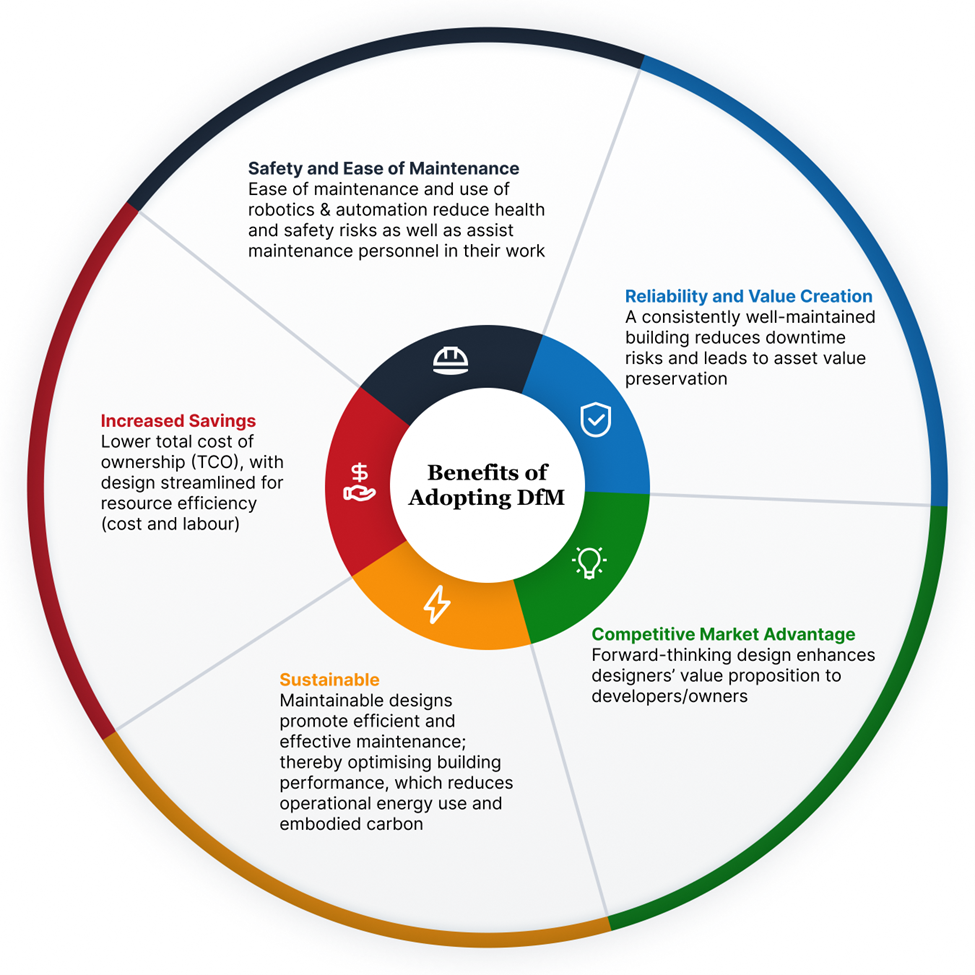
Benefits of DfM
The benefits of DfM for building stakeholders range from life-cycle cost savings to ensuring comfort for building occupants.
Ways to implement DfM best practices
In collaboration with the industry, BCA has also created several resources designed to help project parties integrate DfM considerations into their projects. These resources (available below) are applicable for new buildings and existing buildings undergoing A&A.
Design for Maintainability Guides
Who is it for?
Developers, Designers, Facilities ManagersHow does it work?
The DfM Guides present a comprehensive set of design considerations and best practices for more resource-efficient maintenance regimes.Resources
Green Mark 2021 - DfM is integrated within GM:2021 as the Maintainability (Mt) Section
Who is it for?
Developers, Designers, Facilities Managers
How does it work?
The Maintainability (Mt) Section provides a tool to assess how well a building design supports labour-efficient and cost-effective maintenance.
Facade Access Design Guide (FADG) [PDF, 4.6 MB]
Who is it for?
Developers, Designers, Facilities Managers
How does it work?
The FADG presents strategies for safe and efficient maintenance access to buildings’ facades throughout their lifespans.
Good Practice Guide for Design, Installation, and Maintenance of Building Fixtures [PDF, 2.1 MB]
Who is it for?
Building Owners, Facilities Managers
How does it work?
The guide outlines best practices and standards for designing, maintaining and installing robust building fixtures, especially in public and exposed areas, and emphasises regular inspections to ensure safety, prevent defects, and avoid operational disruptions.