
Advanced Precast Concrete System (APCS)
Using APCS can lead to productivity improvements, shorter construction cycles, and better quality control in construction projects. Projects considering use of APCS should pay attention to regulatory requirements and design with APCS use in mind.
Last updated 16 March 2026
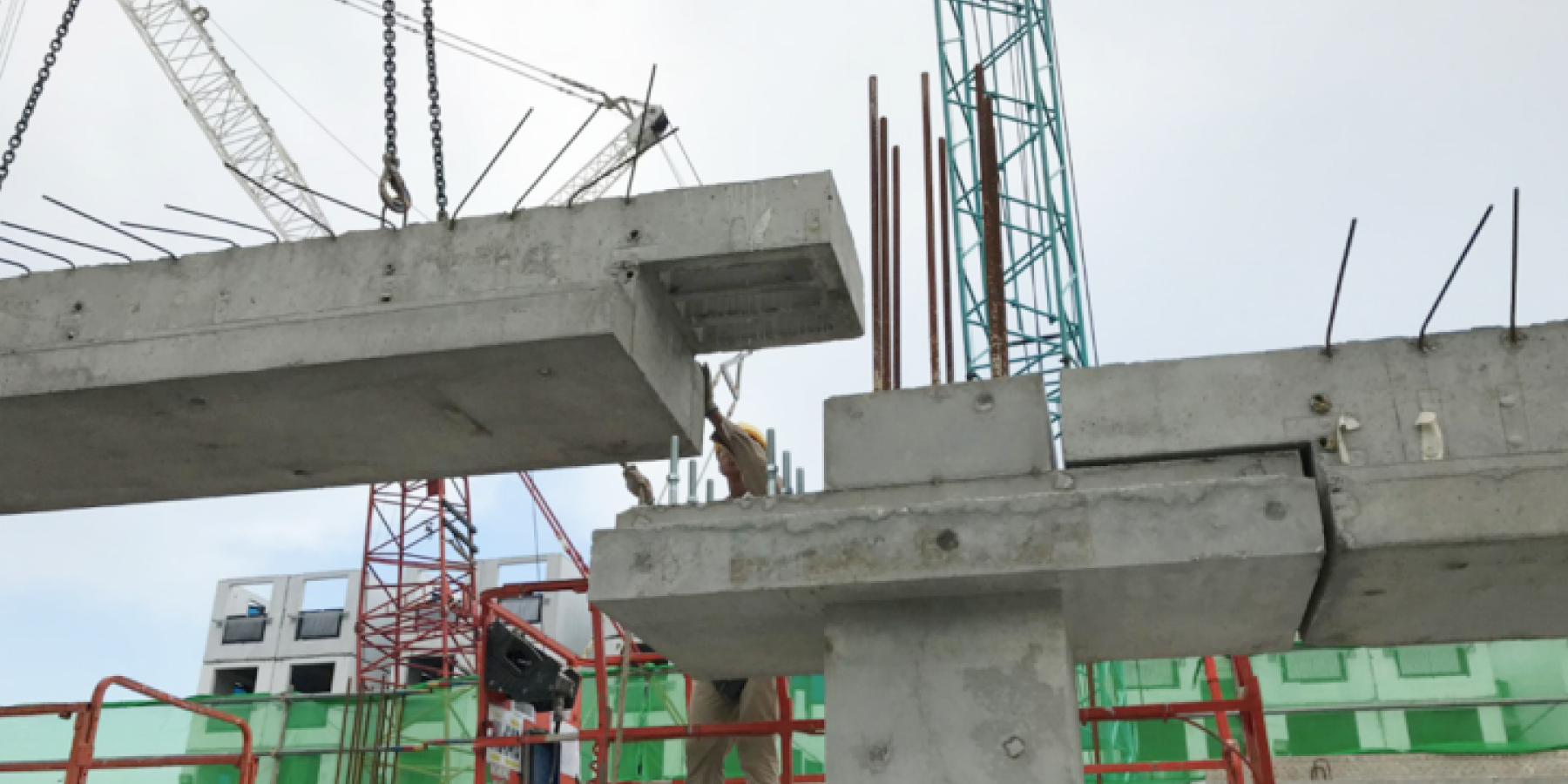
APCS components being lifted in place
What is APCS
APCS is a construction method using precast concrete components and applies features under the ‘3S’ principles of Standardisation, Simplicity and Single integrated elements. It enhances precast construction by reducing wet trades, improving manufacturing efficiency, and minimising on-site temporary works, thereby increasing both on and off-site productivity.
Why use APCS
Ease of on-site assembly – Simplified structural design and connections make it easier for precast concrete components to be assembled on site.
Improved productivity – Reduces the need for concreting work on site, leading to productivity improvement of up to 20% in manpower and time savings.
Shorter floor cycle – Minimal or no temporary work/falsework (e.g. scaffolding) results in shorter time taken to complete each floor compared to conventional in-situ works.
Improved quality control – Adoption of automation and manufacturing in a controlled factory environment allows for better precision and quality standards.
Good practices for APCS to maximise productivity outcomes
Reduce number of precast concrete components - Simplify designs to minimise the total number of precast elements required by producing larger components or integrating multiple elements into volumetric components.
Reduce wet joints – Adopt mechanical connections and/or integrated precast joints to avoid protruding rebars and wet joints, for increased fabrication and installation productivity and enhanced safety.
Reduce on-site finishing works – Apply off-site finishing to streamline installation and reduce post-installation finishing works.
Reduce reliance on temporary props - Design for structural stability to minimise the need for temporary support systems during construction.
Increase modularisation of precast concrete components - Promote the use of standardised modules to improve manufacturing and installation efficiency.
Adopt advanced manufacturing methods - Leverage modern manufacturing technologies such as automation, digital fabrication, and flexible moulds.
Examples of good practices for APCS can be found in the APCS Guidebook linked in the Resources section below.
Compliance with Regulations and Acceptable Solutions in Singapore
Prevailing Building Control Regulations – All buildings and structures must comply with the objectives and performance requirements set out in the prevailing Building Control Regulations and Approved Document under the Building Control Act.
The requirements for APCS adoption can be found in the prevailing Code of Practice (COP) on Buildability under the Building Control Act.