
Lifts, Escalators & Mechanised Car Parking Systems
Lift Modernisation
Ageing lifts can face more breakdowns, rising maintenance costs, and parts obsolescence, making modernisation essential for effective life-cycle management of lifts. This guide covers three key areas: the challenges of ageing lifts, what constitutes full modernisation and why it is more effective than partial fixes, and how to prepare for modernisation. Read on to see how timely modernisation can future proof your lifts.
Part 1: Challenges of Ageing Lifts and the Imperative for Modernisation
As lifts reach advanced operational age, building owners typically encounter two significant challenges that compromise performance and escalate operational costs:
⚠️ Increased Frequency of Breakdowns
Ageing lift systems experience increased breakdown rates due to component deterioration and parts obsolescence. This results in extended service and operation interruptions, and considerable inconvenience for building occupants, particularly those with mobility dependencies.
💰 Escalating Maintenance Expenditure
The cumulative cost of recurring repairs attributable to component wear substantially increases financial burden on building owners. Furthermore, when components become obsolete, procuring suitable alternatives or commissioning bespoke replacements presents both logistical challenges and significant cost implications.
Root cause of these challenges: System-level Deterioration and Parts Obsolescence
The fundamental causes of these operational challenges stem from two unavoidable realities:
🛠️System-level deterioration due to wear and tear; and
🔚Obsolescence of lift components.
Read more...
Mechanical and electrical systems are inherently susceptible to wear and deterioration over time, resulting in increasingly frequent breakdowns if no proper maintenance including timely replacement of worn-out parts is carried out.
Furthermore, rapid technological advancement frequently renders components obsolete, particularly electronic control systems such as printed circuit boards. Consequently, sourcing replacement components becomes increasingly difficult, often resulting in extended lead times and dramatically increased costs that make repairs economically unviable.
Part 2 : Modernisation of Lifts
Modernisation of lifts offers the only viable long-term solution to ageing lift issues. Full modernisation refers to the comprehensive replacement of all components so that the lift's lifespan is effectively "reset", ensuring that the modernised lift meets the latest safety standards, delivers improved reliability, and enhances overall building asset value.
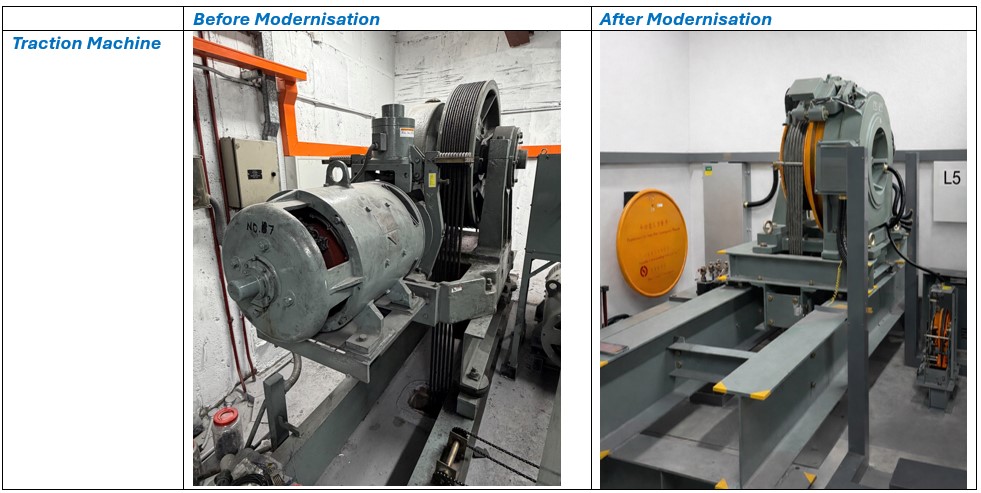
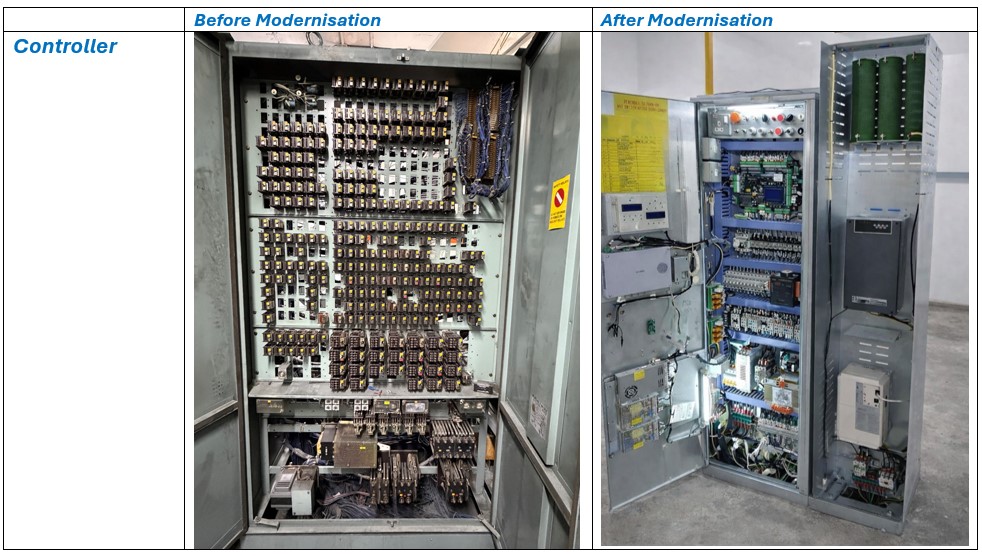
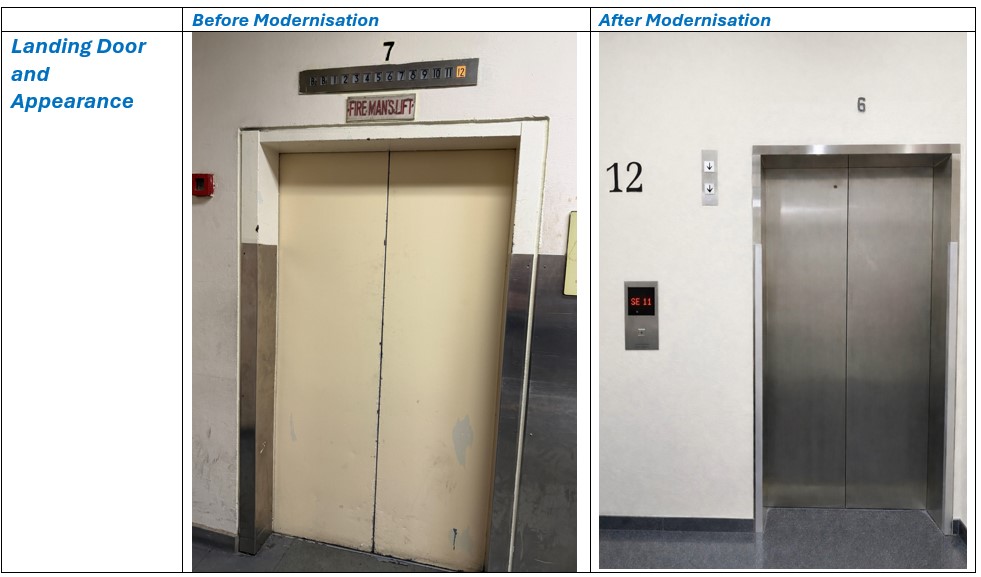
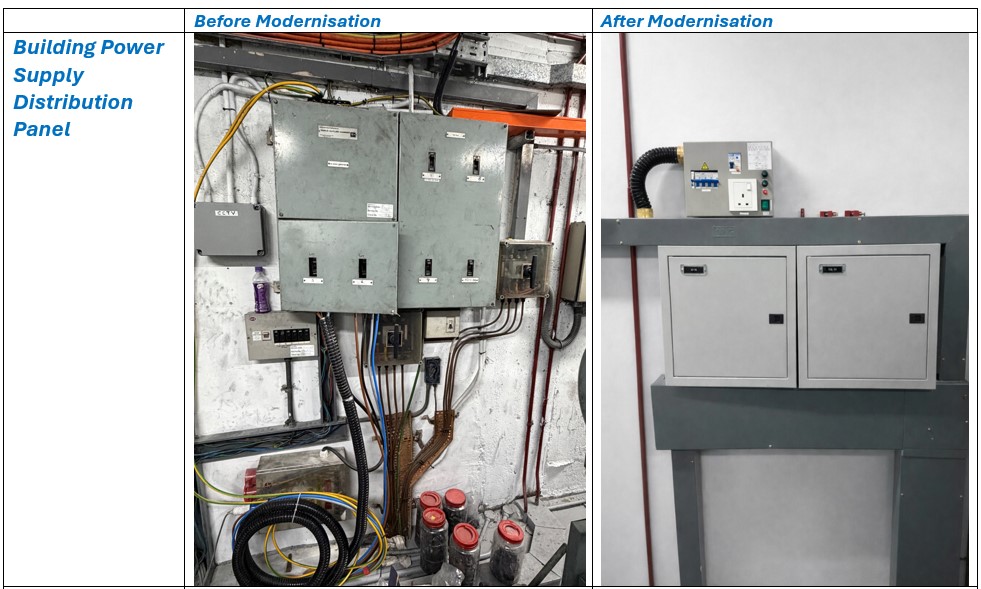
Refer to Annex A for comprehensive information on modernisation benefits and Annex B for comparison of lifts before and after modernisation.
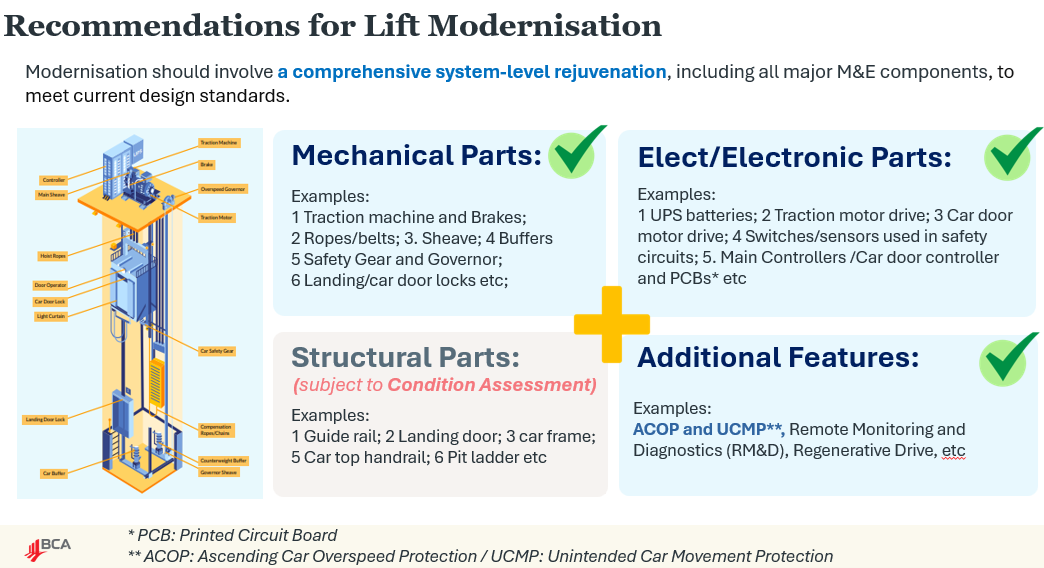
Figure 1: Typical categorisation of lift major parts and recommendations for Modernisation
Recommended Modernisation Timeline
For lift systems approaching 15 years of operational service, building owners should proactively appoint qualified professionals to conduct comprehensive condition assessments of the entire lift system and develop appropriate modernisation plans. This strategic timing allows for proper planning and budget preparation before crisis-level failures occur. If modernisation is not carried out, a condition assessment of the entire lift system is recommended every 5 years to confirm that the lift is safe for continued use.
Full Modernisation Approach
Modernisation encompasses far more than selective component replacement or upgrade — it involves comprehensive replacement of the entire lift system based on the latest codes to ensure sustained, safe, and reliable operation for decades to come.
A full modernisation compassing all major mechanical and electrical components eliminates the compatibility issues between old and new parts which may otherwise result in recurring failures of parts often observed in piecemeal replacement strategies.
Essential safety features that may not be present in older lifts but are required by current codes must be installed. These include Ascending Car Overspeed Protection (ACOP), Unintended Car Movement Protection (UCMP), proper handrails, and pit access ladders.
In addition, building owners should also consider Singapore's unique weather patterns, particularly wind-driven rain, and evaluate related building services to ensure adequate shelter or screening prevents rainwater damage to lift systems from water ingress into lift pits or motor rooms.
Structural elements may be retained if assessed by qualified professionals as being in satisfactory condition.
For owners who prefer to modernise in phases, it is recommended that they work out a comprehensive modernisation plan with the contractor and compare the differences between one-time full modernisation and phased modernisation, including overall costs, schedule, in order to make well-informed decisions.
Limitations of “Partial” Upgrade
Some building owners pursue partial lift upgrade strategies, believing them to be cost-effective. However, partial upgrades prove insufficient to address all challenges associated with ageing lift systems and often create more problems than they solve. Whilst partial upgrades may appear cost-effective initially, a comprehensive approach typically proves far more economically viable in the long term. Multiple partial upgrading phases often result in significantly higher aggregate costs, extended downtime periods, and increased operational disruption that frustrates building occupants.
Retaining obsolete components — such as existing car door operators whilst replacing only controllers and traction machines—continues to result in frequent operational failures. The fundamental obsolescence issues with retained components remain unresolved, rendering the lift system costly and challenging to maintain. When these retained components inevitably fail, repeated repairs or additional upgrade phases become necessary.
Case Study: Inadequate Modernisation Resulting in Incremental Upgrades
Read more...
A 20-year-old condominium with 12 lifts experienced frequent breakdowns throughout the estate. At their Annual General Meeting, approval was obtained to upgrade the lifts to address these persistent failures. However, the scope was limited to controller and traction sheave replacement, accompanied by cosmetic enhancements, costing the estate over $500,000.
Despite this substantial investment, the lifts continued experiencing frequent breakdowns due to failures of older components that were not upgraded. This resulted in significant inconvenience and resident dissatisfaction, with complaints about poor lift performance despite the large expenditure. Consequently, the estate was forced to spend an additional $200,000 on repairs and component replacements.
To date, the estate continues suffering from frequent lift breakdowns and is now considering undertaking full modernisation—the comprehensive solution they should have implemented initially. This case demonstrates how attempting to save money through partial measures ultimately costs more whilst prolonging resident frustration.
Part 3: Preparation for Lift Modernisation
Modernisation requires substantial capital investment, making advance planning critical for ensuring sufficient budget availability when modernisation becomes necessary. This is particularly important for condominiums (MCST) where sinking funds finance modernisation projects. Failure to plan and collect funds early typically results in insufficient budgets, necessitating special levies that burden residents with unexpected costs.
For lift modernisation, building owners should set aside at least $120,000 for each lift. As actual costs may vary depending on factors such as floor count, lift speed, and technical specifications, building owners are advised to obtain detailed quotations from qualified lift contractors for accurate cost estimation tailored to their specific requirements.
Financial Planning Strategies for Modernisation
Financial planning for lift modernisation for Management Corporation Strata Title (MCST) entails:
📝Advance Planning and Collection of Fund
Lift modernisation represents one of the most significant capital expenditures that MCSTs may encounter, necessitating proactive fund preparation. For newer developments, it is strongly recommended to begin planning and collecting funds for lift modernisation immediately. This approach allows for gradual accumulation over time, reducing the financial burden on individual residents. For estates with older lifts where modernisation needs are immediate or anticipated in the near term, special levies may be required. However, proper advance planning minimises this risk and reduces the financial impact on residents.
Lift modernisation should be incorporated as a fundamental component within the MCST's sinking fund schedule as part of the proposed annual budget presented at each Annual General Meeting (AGM).
Example of budget planning for lift modernisation:
Age of development: 15
Years to modernisation: 10 (projected)
Cost of modernisation per lift: SGD$120,000
Number of lifts in condominium: 15
Required budget for lift modernisation: SGD$1,800,000
Share value of development: 900
Amount to be collected per share value per year: SGD$2,000
Additional amount to collect for sinking fund per quarter per share value: SGD$50
👥Contractor Consultation for Cost Assessment
Modernisation costs vary significantly according to factors including floor count, lift capacity, operational speed, and equipment specifications. Early engagement with qualified lift contractors is essential to obtain comprehensive cost estimates, ensuring budgeted modernisation amounts proposed within each MCST's annual budget accurately reflect current market conditions and technical requirements.
🔎Periodic Review
The cost of lift modernisation is not solely dependent on technical specifications and may rise due to factors such as inflation, evolving regulatory requirements, or new technologies. Regular review of modernisation budgets is important to ensure projections remain valid and keep pace with current market conditions. It is recommended that MCST entities obtain quotation updates at least once every five years for review of modernisation plans.
💵Special Levy Collection (Where Required)
The MCST can vote to introduce a special contribution or levy where there are insufficient funds to cover expenses involving major expenditure or unforeseen work. During the general meeting, the MCST can decide how often levies are collected, for example, yearly, half-yearly, quarterly or monthly. For many MCSTs, paying smaller amounts on a more frequent basis may be more affordable than paying larger amounts on an annual basis.
Annex A
Benefits of Modernisation
Modernisation Benefits | Modernisation |
|---|---|
i) Compliance with the Latest Safety Standards | ✅ |
ii) Improved Performance & Reliability | ✅ |
iii) Energy Efficiency & Additional Features | ✅ |
iv) Lower Maintenance Costs | ✅ |
v) Enhanced Image of the estate | ✅ |
Annex B
Comparison of lifts before and after modernisation
Annex C
Related information
Description | Click to download |
|---|---|
Slides | Future-proofing your lifts : Lift Modernisation [PDF, 1.8 MB] |
Infographics | Why MCST should prioritise the lift modernisation [PDF, 761 kB] |