
Air-conditioning safety
Air-conditioning units and their structural supporting systems are exposed to weather elements and may deteriorate over time. Regular checks and maintenance of units fitted on building exteriors or projecting outwards are essential to prevent dislodgement and ensure safety for occupants and the public.
Last updated 12 March 2026
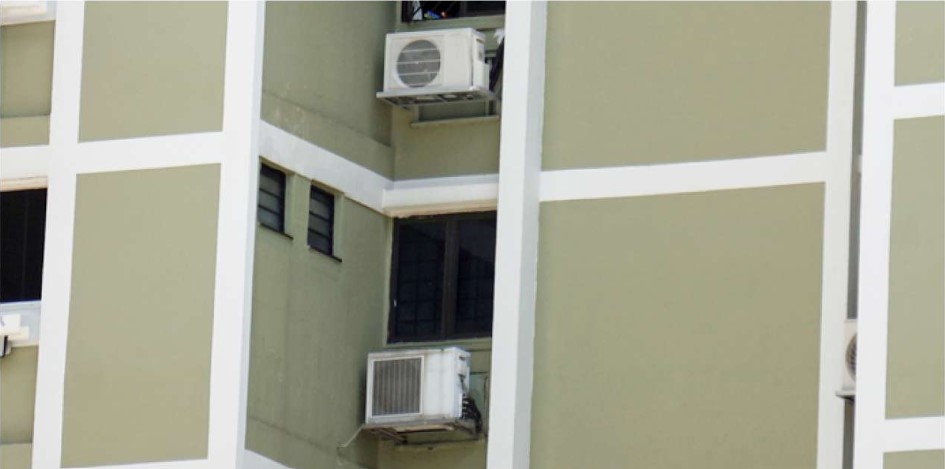
Regular checks and maintenance of air-conditioning unit supports help prevent dislodgement. This is especially so for air-conditioning units exposed to weather or those projecting from buildings. Owners should work with trained installers to ensure safe and regular upkeep.
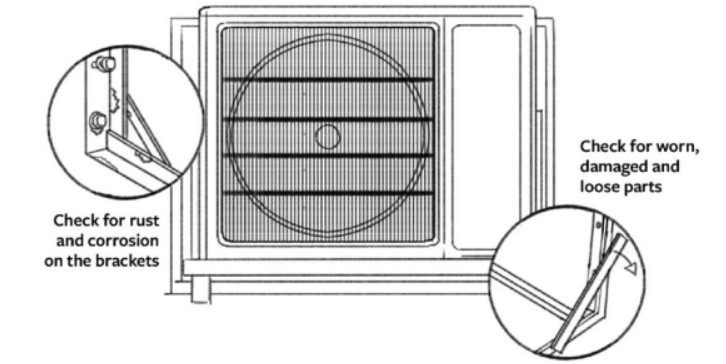
Air-conditioning unit structural supporting system resources for owners
Maintenance requirements for air-conditioning unit structural supporting systems
Owners must regularly check their air-conditioning supports (e.g. stainless steel brackets, concrete ledges) to ensure that they remain safe and secure.
Maintenance tips:
Inspect supports for corrosion or damage at least every 6 months.
Have a trained air-conditioning unit installer inspect the supports during routine servicing.
Replace badly corroded brackets with new stainless steel ones.
Repair any cracks or deterioration in concrete ledges or casings.
Ensure all installation or retrofitting is done by a trained air-conditioning unit installer who has an identification pass and is registered with BCA.
Installation requirements for air-conditioning unit structural supporting systems
When installing an air-conditioning unit on the exterior of any building or which projects outwards from any building, owners must ensure that the following requirements are met:
Trained air-conditioning unit installer: Only trained air-conditioning unit installers can install an air-conditioning unit outside or projecting from a building. Owners may look for trained air-conditioning unit installers in the list of trained air-conditioning unit installers.
Air-conditioning unit support: If the air-conditioning unit is installed outside or projects from a building, it must be supported by a stainless steel bracket or concrete ledge/casing designed for this purpose.
Units installed inside the property are exempt from this requirement, but building owners should still check and maintain their supports regularly, repairing or replacing them if needed. Note: BCA does not specify where air-conditioning units must be installed.
Air-conditioning unit tray installation: Regular checks and maintenance of the tray system, including how it is secured, are required under the Building Control Act. Owners should repair or replace it immediately if it shows signs of deterioration. More details are available on NEA and HDB’s websites.
Air-conditioning unit structural supporting system resources for trained installers
A trained air-conditioning unit installer is an individual certified by the Building and Construction Authority (BCA) to carry out air-conditioning unit installation works.
Under Regulation 41B (2) of the Building Control Regulations 2003, only trained installers may fit air-conditioning units on a building’s exterior or surfaces that project outwards.
Duties of the air-conditioning unit installer
As per Regulation 41C of the Building Control Regulations 2003, the trained air-conditioning unit installer must:
Installing a structural support system that complies with specifications listed under the Seventh Schedule of the Building Control Regulations 2003. Exceptions may be allowed with prior written approval from the Commissioner of Building Control (BCA) or if he has complied with specifications approved by HDB (for HDB flats only).
Submitting the report of the air-conditioning installation works no later than 14 days after completion. Use Form AC-01 [PDF, 81 KB] for private properties and Form AC-02 [PDF, 73 KB] for HDB flats.
How to become a trained air-conditioning unit installer
To become a trained air-conditioning unit installer, register for the Installation of Structural Supports for Air-Con Units course at BCA Academy.